
Categories
Aging Male Sex

ED in Aging Male

Composite case studies have been selected to identify and illustrate the dysfunctional characteristics of the male aging process.

Both Mr. and Mrs. A were 66 and 62 years of age when referred to the Foundation for sexual inadequacy. They had been married 39 years and had three children, the youngest of which was 23 years of age. All children were married and living outside the home.

They had maintained reasonably effective sexual interchange during their marriage.

Mr. A had no difficulty with erection, reasonable ejaculatory control, and, aside from two occasions of prostitute exposure, had been fully committed to the marriage. Mrs. A occasionally orgasmic during intercourse and regularly orgasmic during her occasional masturbatory experiences had continued regularity of coital exposure with her husband until five years before referral for therapy.

Mr. A had recently retired from a major manufacturing concern. He had been relatively successful in his work and there were no specific financial problems facing man and wife during their declining years.

Both members of the marital unit had enjoyed good health throughout the marriage. At age 61, he had taken his wife abroad on a vacation trip which entailed many sightseeing trips with a different city on the agenda almost every day.

They were chronically tired during the exhausting trip, but because they were on vacation and away from home there was a definite increase over the established frequency of coital connections. Mr. A noted for the first time slowed erective attainment.

Regardless of his level of sexual interest or the depth of his wife’s commitment to the specific sexual experience, it took him progressively longer to attain a full erection. With each sexual exposure his concern for the delay in erective security increased until finally, just before termination of the vacation trip, he failed for the first time to achieve an erection quality sufficient for vaginal penetration.

When the coital opportunity first developed after return home, erection was attained, but again it was quite slow in development. The next two opportunities were only partially successful from an erective point of view, and thereafter he was secondarily impotent.

After several months they consulted their physician and were assured that this loss of erective power comes to all men as they age and that there was nothing to be done. Loath to accept the verdict, they tried on several occasions to force an erection with no success. Mr. A was seriously depressed for several months but recovered without apparent incident.

Approximately 18 months after the vacation trip, the couple had accepted their “fate.” The impotence was acknowledged to be a natural result of the aging process. This resigned attitude lasted approximately four years.

Although initially the marital unit and their physician had fallen into the socio-cultural trap of accepting the concept of sexual inadequacy as an aging phenomenon, the more Mr. and Mrs. A considered their dysfunction the less willing they were to accept the blanket concept that lack of erective security was purely the result of the aging process.

They reasoned that they were in good health, had no basic concerns as a marital unit, and took good care of themselves physically. Therefore, why was this dysfunction to be expected simply because some of their friends reportedly had accepted the loss of male erective prowess as a natural occurrence?

Each partner underwent a thorough medical checkup and sought several authoritative opinions, refusing to accept the concept of the irreversibility of their sexual distress. Finally, approximately five years after the onset of a full degree of secondary impotence, they were referred for treatment.

Sexual functioning was reconstituted for this marital unit within the first week after they arrived at the Foundation and as soon as they could absorb and accept the basic material directed toward the variation in the physiological functioning of the aging male.

No longer were they concerned with the delay in erective attainment; there were no more attempts to will, force, or strain to accomplish erection under assumed pressures of performance.

In short:

They needed only the security of the knowledge that the response pattern which initially had raised the basic fear of dysfunction was a perfectly natural result of the involutional process.

When they could accept the fact that it naturally took longer for an older man to achieve an erection, particularly if he were tired or distracted, the basis for their own sexual inadequacy disappeared.

Some six years after termination of the acute phase of therapy, this couple, now in the early seventies and late sixties, continue coital connection once or twice a week.

The husband has learned to ejaculate on his own demand schedule, and neither partner attempts a rapid return to sexual function after a mutually satisfactory sexual episode.

Husband and wife B

The husband, age 62, and his wife, age 63, were referred to the Foundation. They had two children, both of whom were married and lived out of the home.

Their sexual dysfunction had begun when the husband was 57 years old. He had noted some delay in attaining erection and marked reduction in ejaculatory volume and was particularly concerned with the fact that the ejaculatory experience was one of mere dribbling of seminal fluid from the external urethral meatus, under obviously reduced pressure.

All these involutional signs and symptoms developed within approximately a year after he had noticed some delay in onset of erection attainment.

The more he worried about his symptoms the more frequent the occasions of impotence.

Mrs. B was completely convinced that this pattern of sexual involution was true to be expected as part of the aging process.

Rather than distress her husband, she suggested that they use separate bedrooms.

She changed from a pattern of free and easy exchange of sexual demand to one of availability for coital connection only at her husband’s expression of interest. To resolve her own sexual tensions, she masturbated about once every ten days to two weeks without her husband’s knowledge.

Finally, Mr. B developed severe prostatic spasm with ejaculation during approximately half the increasingly rare occasions when there was sufficient erective security to establish a coital connection. It was the persistence of this symptom of pain that first brought medical consultation and ultimately referral for treatment.

In the evaluation of this man during the physical examination, there was marked muscular weakness noted, a history of easy fatigability, and increasing lassitude in physical expression.

Mr. B also had been distressed in the last two to three years before referral to therapy with distinct memory loss for recent events. He described the loss of work effectiveness for approximately the same length of time.

With these overt symptoms suggestive of steroid starvation, testosterone replacement was initiated empirically. Within those days there was the partial return of ejaculatory pressure and a moderate shortening of the time span for the delayed erective reaction. The prostatic pain did not recur.

Husband and wife B Steroid Replacement

Once Mrs. B could accept the explanation for the onset of her husband’s sexual dysfunction, she was pleased to return to the role of an active sexual partner. The coital connection has continued regularly for the past three years with both members of the marital unit supported by steroid-replacement techniques.

In brief, for the sexually dysfunctional aging male, the primary concern is one of education so that both the man and his wife can understand the natural involutional changes that can develop within their established pattern of sexual performance.

Sex steroid replacement should be employed only if definite physical evidence of the male climacteric exists. As the newer techniques for establishing testosterone levels in blood serum become more widely disseminated, it will be infinitely easier to define and describe the male climacteric and therefore to offer testosterone replacement to those who need it, on a more definitive basis than the empirical diagnosis.

With effective dissemination of information by proper authority, the aging man can be expected to continue in a sexually effective manner into his ninth decade. Fears of performance are engendered by a lack of knowledge of the natural involutional changes in male sexual responsivity that accompany the aging process.

Really, the only factor that the aging male must understand is that loss of erective prowess is not a natural component of aging.

Statistical evaluation of the aging population and a consideration of treatment failure rates will constitute the following section. This material arbitrarily has been placed in the male rather than the female.

First, it was felt important to keep the statistical consideration of the aging marital units together, and second, because there were 56 males So years old or over in marital units accepted for treatment and only 37 wives 50 or older, it seemed appropriate to include the brief statistical discussion in the chapter reflecting the larger segment of the aging population.

Categories
Aging Male Sex

Aging Male Sex

The natural aging process creates a number of specific physiological changes in the male cycle of sexual response. Knowledge of these cycle variations has not been widely disseminated.

There has been the little concept of a physiological basis for differentiating between natural sexual involution and pathological dysfunction when considering the problems of male sexual dysfunction in the post-so age group.

If all too few professionals are conversant with anticipated alterations in male sexual functioning created by the aging process, how can the general public be expected to adjust to the internal alarms raised by these naturally occurring phenomena?

Tragically, yet understandably, tens of thousands of men have moved from effective sexual functioning to varying levels of secondary impotence as they age, because they did not understand the natural variants that physiological aging imposes on previously established patterns of sexual functioning.

Sexually Impaired at 50

From a psychosexual point of view, the male over age 50 has to contend with one of the great fallacies of our culture. Every man in this age group is arbitrarily identified by both public and professional alike as sexually impaired.

When the aging male is faced by unexplained yet natural involutional sexual changes, and deflated by widespread psychosocial acceptance of the fallacy of sexual incompetence as a natural component of the aging process, is it any wonder that he carries a constantly increasing burden of fear of performance?

Before discussing specifics of sexual dysfunction in the aging population, the natural variants that the aging process imposes on the established male cycle of sexual response should be considered.

For sake of discussion, the four phases of the sexual response cycle excitement, plateau, orgasm, and resolution will be employed to establish a descriptive framework. Also for descriptive purposes, the term older man will be used in reference to the male population from 50 to 70 years of age and the term younger man used to describe the 20 to 40 year age group.

In recent years the younger man’s sexual response cycle has been established with physiological validity and will serve as a baseline for comparison with the physiological variations of aging.

If an older man can be objective about his reactions to sexual stimuli during the excitement phase, he may note a significant delay in erective attainment compared to his facility of response as a younger man.

Most older men do not establish erective response to effective sexual stimulation for a matter of minutes, as opposed to a matter 9f seconds as younger men, and the erection may not be as full or as demanding as that to which previously he has been accustomed.

It simply takes the older man longer to be fully involved subjectively in acceptance and expression of any form of sensate stimulation.

If natural delays in reaction time are appreciated, there will be no panic on the part of either husband or wife. If, however, the aging male is uninformed and not anticipating delayed physiological reactions to sexual stimuli, he may indeed panic and responding in the worst possible way to try to will or force an erection.

The unfortunate results of this approach to erective security have been discussed at length in treatment of impotence.

Aging Male Erections

As the aging male approaches the plateau phase, his erection usually has been established with fair security. There may be little if any testicular elevation, a negligible amount of scrotal-sac vasocongestion, and minimal deep vascular engorgement of the testes.

Most older men who have had a pre-ejaculatory fluid emission (Cowper’s gland secretory activity) will notice either total absence of, or marked reduction in, the amount of this pre-ejaculatory emission as they age.

From the aspect of time-span, the plateau phase usually lasts longer for an older man than for his younger counterpart. When an aging male reaches that level of elevated sexual tension identified as thoroughly enjoyable, he usually can and frequently does wish to maintain this plateau-phase level of sensual pleasure for an indefinite period of time without becoming enmeshed by ejaculatory demand.

This response pattern is age-related; the younger man tends to drive for early ejaculatory release when plateau-phase levels of sexual tension have accrued. One of the advantages of the aging process with specific reference to sexual functioning is that.

Generally speaking, control of ejaculatory demand in the 50 to 70 year age group is far better than in the 20 to 40 year age group.

In the cycle of sexual response, the largest number of physiological changes to come within objective focus for older men occurs during the orgasmic phase (ejaculatory process). The orgasmic phase is relatively standardized for younger men, varying minimally in duration and intensity of experience unless influenced by the psychosexual opposites of long-continued continence or high level of sexual satiation.

For younger men, the entire ejaculatory process is divided into two well-recognized stages. The first stage, ejaculatory inevitability, is the brief period of time (2 to 4 seconds) during which the male feels the ejaculation coming and no longer can control it before ejaculation actually occurs.

These subjective symptoms of ejaculatory inevitability are created physiologically by regularly recurring contractions of the prostate gland and, questionably, the seminal vesicles. Contractions of the prostate begin at o.8-second intervals and continue through both stages of the male orgasmic experience.

The second stage of the orgasmic phenomenon consists of the expulsion of the seminal-fluid bolus accrued under pressure in the membranous and prostatic portions of the urethra, through the full length of the penile urethra.

Again, there are regularly recurring 0.8-second inter-contractile intervals. This specific interval lengthens after the first three or four contractions of the penile urethra in younger men.

Subjectively, the sensation is one of flow of a volume of warm fluid under pressure and emission of the seminal fluid bolus in ejaculatory spurts with pressure sufficient to expel fluid content distances of 12 to 24 inches beyond the urethral meatus.

As the male ages he develops many individual variants on the basic theme of the two-stage orgasmic experience described for the younger man. Usually his orgasmic experience encompasses a shorter time span.

There may not be even a recognizable first stage to the ejaculatory experience, so that an orgasmic experience without the stage of ejaculatory inevitability is quite a common occurrence.

Even with a recognizable first stage, there still may be marked variation in reaction pattern. Occasionally, the older man’s phase of ejaculatory inevitability lasts but a second or two as opposed to the younger man’s pattern ranging from 2 to 4 seconds.

In an older man’s first-stage experience, there may be only one or two contractions of the prostate before involuntary initiation of the second stage, seminal-fluid expulsion.

Alternatively, the first stage of orgasmic experience may be held for as long as 5 to 7 seconds. Occasionally the prostate, instead of contracting within the regularly described pattern of 0.8-second intervals, develops a spastic contraction, creating subjectively the sense of ejaculatory inevitability.

Inadequate Testosterone

The prostate may not relax from spasm into rhythmically expulsive contractions for several seconds, hence the 5-7-second duration of the first-stage experience. In addition to objective variants in a first-stage orgasmic episode, there may be no possible objective or subjective definition of the first stage of orgasmic experience at all.

The stage of ejaculatory inevitability may be totally missing from the aging male’s sexual response cycle. A single-stage orgasmic episode develops clinically in two circumstances.

The first circumstance is that of clinical dysfunction developing as the result of inadequate testosterone production.

Actually, the lack of a recognizable first stage in orgasmic experience can result from low sex-steroid level for the male just as steroid starvation in the female may produce an orgasmic experience of markedly brief duration.

The second occasion of an absent first stage in the orgasmic experience develops after there has been a prior denial of ejaculatory opportunity over a long period of intravaginal containment in order to satisfy the aging male’s coital partner sexually.

There also are obvious physiological changes in the second stage of the orgasmic experience that develop with the aging process.

The expulsive contractions of the penile urethra have onset at 0.8second intervals but are maintained for only one or two contractions at this rate:

The expulsive force delivering the seminal fluid bolus externally, so characteristic of second-stage penile contractions in the younger man, also is diminished, with the distance of unencumbered seminal-fluid expulsion ranging from 3 to 12 inches from the urethral meatus.

Categories
Aging Male Sex

Aging Male & Female

Arbitrarily, statistics reflecting the failure rates of treatment procedures for sexual dysfunction in the aging population will be considered in this section rather than dividing the material between the discussions of sexual inadequacy in the aging male and female.

A brief single presentation seems in order since only marital units are available for consideration in this age group. The male and female statistics are essentially inseparable from a therapeutic point of view, and the overall sample is entirely too small for definitive individual interpretation.

Statistics

In 51 of the total of 56 aging marital units treated for sexual dysfunction, the husband was the instigating agent in bringing the marital unit to therapy. Among the remaining 5 couples, the referral apparently was by the mutual accord in 3 and only at the demand of the wife in 2 couples.

There also was a higher incidence of referred male sexual dysfunction than of female sexual inadequacy in the aging population. Therefore the discussion will focus on the male partner’s age as a point of departure.

Since the husband was the partner most often involved in dysfunctional pathology and was the member of the unit that usually took the necessary steps to accomplish referral to the Foundation, the aging male will be statistically highlighted.

The 56 marital couples referred for treatment divide into 33 units with bilateral complaints of sexual dysfunction and 23 units with unilateral complaints of sexual inadequacy. Thus, there were 89 individual cases of sexual dysfunction treated from the 56 units with husbands’ age 5o years or over as a common baseline.

This 33:23 ratio is a reversal of the overall statistics for dual-partner involvement of marital units as opposed to singly involved units. The fact that there was a dominance of bilateral sexual deficiency among the older marital units is in accord with previously expressed concepts of cultural influences.

Certainly, the older the marital unit the better chance for the Victorian double standard of sexual functioning. With these pressures of performance, one could almost expect more male than female sexual pathology to be in identified unit partners over 50 years of age referred to the Foundation.

The clinical complaints registered by the aging population (male and female) in the 56 marital units referred for treatment. There was a 30.3 percent failure rate to reverse sexual dysfunction, regardless of whether both partners or a single partner is involved, in any marriage with the husband over 50years of age. With gender separation, for the aging male (50 to 79) there was a 25 percent failure rate to reverse his basic complaint of sexual inadequacy as compared to a 40.7 percent failure rate for the aging female (50 to 79).

These statistics simply support the well-established clinical concept that the longer the specific sexual inadequacy exists, the higher the failure rate for any form of therapeutic endeavor.

On the other hand, there was a significantly less than 50 percent failure rate in treatment for any form of sexual dysfunction, regardless of the age of the individuals involved. In short, even if the sexual distress has existed for 25 years or more, there is every reason to attempt a clinical reversal of the symptomatology.

There is so little to lose and so much to gain. Presuming generally good health for the sexual partners, and mutual interests in reversing their established sexual dysfunction, every marital unit, regardless of the ages of the partners involved, should consider the possibility of clinical therapy for sexual dysfunction in a positive vein. The old concept “I’m too old to change” does not apply to the symptoms of sexual dysfunction.

Categories
Aging Male Sex

Aging Male Ejaculation

Probably the most important psychophysiological alteration of sexual patterning to develop during the 50 to 70 year period is the human male’s loss of high levels of ejaculatory demand.

So many men in the older age groups consider themselves too old to function sexually, yet cannot explain how they have arrived at this conclusion.

As the male ages, he not only enjoys a fortuitous increase in ejaculatory control but also has a definite reduction in ejaculatory demand.

For Example:

If a man 60 years of age has intercourse on an average of once or twice a week, his own specific drive to ejaculate might be of the major moment every second or third time there is coital connection.

This level of innate demand does not imply that the man cannot or does not ejaculate more frequently. He can force himself and/or be forced by the female-partner insistence to ejaculate more frequently, but if left to resolve his own individual demand level he may find that an ejaculatory experience every second or third coital connection is completely satisfying personally.

Explicitly his own subjective level of ejaculatory demand does not keep pace with the frequency of his physiological ability to achieve an erection or to maintain this erection with full pleasure on an indefinite basis.

This factor of reduced ejaculatory demand for the aging male is the entire basis for effective prolongation of sexual functioning in the aging population.

If an aging man does not ejaculate, he can return to an erection rapidly after prior loss of erective security through distraction or female satiation.

The older man can easily achieve and maintain an erection if there is no ejaculatory threat in the immediate offing. The uninformed woman poses an ejaculatory threat. She believes that she has not accomplished a woman’s purpose unless her coital partner ejaculates.

How many women in our culture feel they have fulfilled the feminine role if their partner has not ejaculated? Whether he likes it or needs it, she must be a good sexual partner. “Everybody knows that a man needs to ejaculate every time he has intercourse” and so goes the refrain.

The message should reach both sexes that after members of the marital unit are somewhere in the early or middle fifties, demand for sexual release should be left to the individual partner.

Then coital connection can be instituted regularly and individual male and female sexual interests satisfied. These interests for the woman can range from demand for multi-orgasmic release to just desiring vaginal, penetration, and holding, without any effort at tension elevation.

If the male is encouraged to ejaculate on his own demand schedule and to have intercourse as it fits both sexual partners’ interest levels, the average marital unit will be capable of functioning sexually well into the 80 year age group, presuming for both man and woman a reasonably good state of general health and an interested and interesting sexual partner.

Effective sexual function for any man in the 50 to 70 year age group depends primarily upon his full understanding of the sexual involutional processes that he may encounter. Effective sexual function for most women also depends upon their knowledge of male sexual physiology in the declining years. Men and women must understand fully the alterations of sexual patterning that may develop if they are to cope effectively with their aging process.

Categories
Herbal Info

10 Healthy Benefits of Grape Seed Extract

What is Grape seed extract (GSE)

Grape seed extract (GSE) is a dietary supplement made by removing, drying, and pulverizing the bitter-tasting seeds of grapes.

Grape seeds are rich in antioxidants, including phenolic acids, anthocyanins, flavonoids, and oligomeric proanthocyanidin complexes (OPCs).

In fact, GSE is one of the best-known sources of proanthocyanidins.

Due to its high antioxidant content, GSE can help prevent disease and protect against oxidative stress, tissue damage, and inflammation.

Note that grape seed extract and grapefruit seed extract are both marketed as supplements and abbreviated by the acronym GSE. This article discusses grape seed extract.

Here are 10 benefits of grape seed extract:

  1. Reduce blood pressure – GSE may help reduce blood pressure, particularly in young to middle-aged people and those who have excess weight.
  2. Improve blood flow – GSE has been shown to improve blood flow and reduce the risk of blood clotting, which may benefit those with circulatory problems.
  3. Reduce oxidative damage – GSE may help reduce your risk of heart disease by inhibiting the oxidation of LDL (bad) cholesterol and reducing oxidation to heart tissue during times of stress.
  4. May improve collagen levels and bone strength – Animal studies show promising results regarding GSE’s ability to help treat arthritic conditions and promote collagen health. However, human-based research is lacking.
  5. Supports your brain as it ages – GSE shows potential to inhibit many of the degenerative characteristics of brain and cognitive decline. However, more human studies are needed.
  6. Can improve kidney function – GSE may offer protection against damage from oxidative stress and inflammation, thus promoting kidney health.
  7. Can inhibit infectious growth – GSE may inhibit a variety of microbes and offer protection against antibiotic-resistant bacterial strains, foodborne bacterial illnesses, and fungal infections like candida.
  8. May reduce cancer risk – GSE also appears to reduce chemotherapy-induced toxicity in animal studies without negatively affecting treatment. More human-based research is needed.
  9. May protect your liver – GSE appears to protect your liver against drug-induced toxicity and damage. However, more human studies are needed.
  10. Enhances wound healing and appearance – GSE creams appear to increase growth factors in your skin. As such, they may aid wound healing and help reduce the signs of skin aging.

Possible Side Effects

GSE is generally considered safe with few side effects.

Dosages of around 300–800 mg per day for 8–16 weeks have been found to be safe and well-tolerated in humans.

Those who are pregnant or breastfeeding should avoid it, as there is insufficient data on its effects in these populations.

GSE may lower blood pressure, thin your blood, and increase blood flow, so caution is advised for those taking blood-thinning or blood pressure medications.

Furthermore, it may reduce iron absorption, as well as improve liver function and drug metabolism. Consult your healthcare provider before taking GSE supplements.

SUMMARY

GSE appears to be well tolerated. However, pregnant and breastfeeding women should avoid it. Also, those taking certain medications should discuss taking this supplement with their healthcare provider.

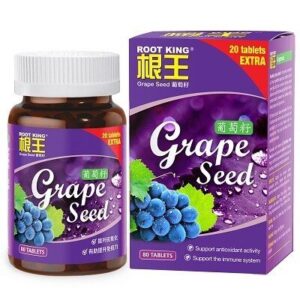
Our Grape Seed Extract Product – Root King Grape Seed

grape seed

Root King Grape Seed is the perfect combination of 3 main ingredients: grape seed, mulberry leaf, and green tea that help to enhance immune system, improve overall health and beauty the skin texture, promote healthy cholesterol level, maintain healthy blood pressure and glucose level. Studies found that taking grape seed extract increased blood levels of antioxidants. Antioxidants aid in destroying free radicals which contribute to aging and health problems such as heart disease and cancer. OPC belongs to a group of powerful antioxidant compound, are found in grape seeds, helps body produce glutathione (master antioxidant) that protects DNA and strengthens the immune system.

FOR MEN & WOMEN.

  • Improve Immunity
  • Promote antioxidant
  • Antiaging properties
  • Slow down growth of cancer cells
  • Scavenging free radicals

Effect

  • Grape seeds contain resveratrol
  • Lower cholesterol level
  • Keep skin healthy
  • Protect cells, anti-cancer, destroy cancer cell

Ingredients: Grape Seed, Mulberry Leaf, Green Tea, Buckwheat, Lycopene

Packing Size: 60 + 20 tablets.

How to use: Take 2-3 times daily, 1 – 2 tablets each time.

Purchase Here >> Root King Grape Seed

Categories
Women's Health

Inadequate Orgasm

To consider situationally non-orgasmic, a woman must have experienced at least one instance of orgasmic expression, regardless of whether it was induced by self or by partner manipulation, developed during vaginal or rectal coital connection, or stimulated by the oral-genital exchange.

Orgasmic experience during homosexual encounters would rule out any possibility of a diagnosis of primary orgasmic dysfunction. Three arbitrary categories of situational sexual dysfunction have been defined as masturbatory, coital, and random orgasmic inadequacy.

A woman with masturbatory orgasmic inadequacy has not achieved orgasmic release by partner or self-manipulation in either homosexual or heterosexual experience. She can and does reach orgasmic expression during coital connection.

Coital orgasmic inadequacy applies to the great number of women who have never been able to achieve orgasmic return during coition. The category includes women able to masturbate or to be manipulated to orgasmic return and those who can respond to orgasmic release from oral-genital or other stimulative techniques.

The random orgasmic-inadequacy grouping includes those women with histories of orgasmic return at least once during both manipulative and coital opportunities. These women are rarely orgasmic and usually are aware of little or no physical need for sexual expression.

For Example:

They might achieve orgasmic return with coital activity on a vacation, but never while at home. Occasionally these women might masturbate to orgasm if separated from a sexual partner for long periods of time. Usually, when they obtain orgasmic release, the experience is as much of a surprise to them as it is to their established sexual partner.

The situational non-orgasmic state may best be described by again pointing out the varying levels of dominance created by the biophysical and the psychosocial structures of influence. If the woman’s sexual value system reflects sufficiently negative input from prior conditioning psychosocial influence, she may not be able to adapt sexual expression to the positive stimulus of the particular time, place, or circumstance of her choosing nor develop a responsive reaction to the partner of her choice.

If that part of any woman’s sexual value system susceptible to the influence of the biophysical structure is overwhelmed by a negative input from pain with any attempted coital connection, there rarely will be an effective sexual response.

Thus there is a multiplicity of influences thrown onto the balance wheel of female sexual responsivity. Fortunately, the two major systems of influence accommodate these variables through involuntary interdigitation. If there were not the probability of admixture of influence, there might be relatively few occasions of female orgasmic experience.

Sexual Partner

A major source of orgasmic influence for both primarily and situationally dysfunctional women is partner orientation. What value has the male partner in the woman’s eyes? Does the chosen male maintain his image of masculinity? Regardless of his acknowledged faults, does he meet the woman’s requirements of character, intelligence, ego strength, drive, physical characteristics, etc.?

Obviously, every woman’s, partner requirements vary with her age, personal experience and confidence, and the requisites of her sexual value system.

The two case stories below underscore the variables of a woman’s orientation to her male sexual partner. The histories of Mr. and Mrs. E and Mr. and Mrs. F are presented, to emphasize that a potential exists for radical change in attitudinal concepts during the course of any marriage.

Mr. and Mrs. E

were referred for treatment of orgasmic dysfunction after 23 years of marriage. They had two children, a girl 20 and a boy 29.

The history of sexual dysfunction dated back to the twelfth year of the marriage. Both had relatively unremarkable backgrounds to family, education, and religious influences.

Both had masturbated as teenagers and had intercourse with other partners and with each other before marriage. Mrs. E usually had been orgasmic during these coital opportunities with her husband-to-be and with two other partners.

During the first twelve years of the marriage, the couple prospered financially and socially and had many common interests. Their sexual expression is resolved into an established pattern of sexual release two or three times a week.

There was the regularity of orgasmic return and frequently multi-orgasmic return during intercourse. During the twelfth year of the marriage, the unit experienced a severe financial reversal. Mr. E was discharged from his position with the company that had employed him since the start of the marriage.

In the following 18 months, he was unsuccessful in obtaining any permanent type of employment. He became chronically depressed and drank too much. The established pattern of couple sexual encounter was either quite reduced or, on occasions, demandingly increased.

Husband Extramarital Relationship

Then Mrs. E found that her husband was involved in an extramarital relationship and confronted him in the matter. A bitter argument followed, and she refused him the privilege of the marital bed. This sexual isolation lasted for approximately six months, during which time.

Mr. E began working again, regained control of his alcohol intake, and terminated his extramarital interest. For the duration of this isolation period, Mrs. E had no coital opportunity and did not masturbate. When the privilege of the bedroom was restored, to her surprise she was distracted rather than stimulated by her husband’s sexual approaches and was not orgasmic.

She had lost confidence in her husband not only as an individual but also as a masculine figure. Mrs. E found herself going through the motions sexually. From the time the bedroom door was reopened until the unit was seen in therapy, she was non-orgasmic regardless of the mode of sexual approach. The coital connection had dwindled to a ten-day to the two-week frequency of “wifely duty.”

When a major element in any woman’s sexual value system (partner identification in this instance) is negated or neutralized by a combination of circumstances, many women find no immediate replacement factor. Until they do, their facility for sexual responsivity frequently remains jeopardized.

When Mr. E combined loss of his masculine image as the provider with excessive alcohol intake and, also, acquired another sexual partner, he destroyed his wife’s concept of his sexual image, and, in doing so, removed from availability a vital stimulative component of her sexual value system. The negative input of psychosocial influence created by Mr. E’s loss of masculinity and impairment of her sense of sexual desirability was sufficient to inhibit her natural sexual responsivity.

Mr. and Mrs. F

were referred for treatment six years after they married when he was 29 and she was 24 years old. They had one child, a girl, during their third year together. Mrs. F Was from a family of seven children and remembers a warm community experience in growing up with harried but happy parents.

Mr. F had exactly the opposite background. He was an only child in a family where both father and mother devoted themselves to his every interest, in short, the typical overindulged single child.

He had masturbated from early teens, had some sexual experiences, and one brief engagement with coital connection maintained regularly for six months before he terminated the commitment. Mrs. F, although she dated regularly as a girl, was fundamentally oriented to group-type social commitments. She rarely had experienced single dating.

The school years were uneventful for both individuals. They met and married almost by accident. When they first began dating, each was interested in someone else. However, their mutual interest increased rapidly and developed into a courtship that included regularity of coital connection for three months before marriage.

Every social decision was made by Mr. F during the courtship. The same pattern of total control continued into marriage. He insisted on making all decisions and was consistently concerned with his own demands, paying little or no attention to his wife% interests. Constant friction developed, as is so frequently the case with marital partners whose backgrounds are opposed.

Mrs. F had not been orgasmic before marriage. In marriage, she was orgasmic on several occasions with manipulation but not during coition. As the personal friction between the marital partners increased, she found herself less and less responsive during active coital connection.

Pregnancy intervened sex

There was an occasional orgasmic success with manipulation. Pregnancy intervened at this time, distracting her for a year, but thereafter her lack of coital return was distressing to her and most embarrassing to her husband.

He worried as much about his image as a sexually effective male as he did about his wife’s levels of sexual frustration. Mrs. F’s lack of effective sexual response was considered a personal affront by her uninformed husband.

They consulted several authorities on the matter of her sexual inadequacy. The husband always sent his wife to authority to have something done to or for her. The thought that the situation might have been in any measure his responsibility was utterly foreign to him.

When the unit was referred for therapy he at first refused to join her in treatment on the basis that it was her problem. When faced with the Foundation demand that both partners cooperate or the problem would not be accepted for treatment, Mr. F grudgingly consented to participate.

Little comment is needed. This intentionally brief history is typical of the woman who cannot identify with her partner because he will not allow such communication. There is no world as dosed to the vital ingredient of marital expression as that of the world of the indulged only child.

Particularly is this attitudinal background incomprehensible to a woman with a typical large family orientation. When Mr. F failed to accord his wife the representation of her own requirements, she had no opportunity to think or feel sexually. The catalytic ingredient of mutual partner involvement was missing.

Categories
Women's Health

Impotent and Female Orgasm

Although emphasis has been placed upon the role of premature ejaculation in the etiology of primary orgasmic dysfunction, primary or secondary impotence also contributes. Again the basic theme of man and woman coital interaction must be emphasized.

If there is not a sexually effective male partner, the female partner has the dual handicap of fear for her husband’s sexual performance as well as for her own.

If there is no penile erection there will be no effective coital connection.

Frequently women married to impotent men cannot accept the idea of developing a masturbatory facility or being manipulated to orgasm as a substitute for tension release.

However, if there has been a masturbatory pattern established before coital inadequacy assumes dominance, most women can return to this sexual outlet. In this situation, there is sufficient dominance of the previously conditioned biophysical structure to overcome negative input from a psychosocial system distressed by sexual performance fears.

But if there have been no previous substitute measures established, many women cannot turn to this mode of relief once impotence halts effective coital connection. In this situation, the psychosocial structure, unopposed by prior biophysical conditioning, assumes the dominant influence in the woman’s sexual response pattern.

Mr. and Mrs. D

were referred to the treatment of orgasmic inadequacy after four years of marriage. When seen in therapy she was 27 and her husband 43 years old. He had been married twice previously. There were children of both marriages and none in the current marriage.

The husband also was sexually dysfunctional in that he was secondarily impotent.

His second marriage had been terminated due to his inability to continue the effective coital connection. Although, when the unit was seen in consultation the marriage had been consummated, coitus occurred only once or twice a year.

Mrs. D’s background reflected somewhat limited financial means. Her father had died when the three siblings were young, and the family had been raised by their mother, who worked while the grandmother took care of the children.

Clothes were hand-me-downs, food the bare essentials. Her education had of necessity terminated with high school, and she worked as a receptionist in several different offices befo3e her marriage. She continued to live at home while working and contributed to what salary she made to help with the family’s limited income.

Mrs. D met her future husband when he visited the office where she worked. He invited the young woman to lunch. She accepted and married him four months later without knowledge of his sexual inadequacy, although she had been somewhat puzzled by his lack of forceful sexual approach during the brief courtship.

Mrs. D’s own sexual history had been one of a few unsuccessful attempts at masturbation, numerous petting episodes with boys in and out of high school, but no attempted coital connection. She had never been orgasmic.

Her husband had inherited a large estate and his financial situation certainly was the determining factor in his wife’s marital commitment. Since the girl had been distressed by a family background of genteel poverty, she felt the offer of marriage to be her real opportunity both to escape her environment and to help her two younger siblings.

The wedding trip was an unfortunate experience for Mrs. D when she realized for the first time that her husband had major functional difficulties. She knew little of male sexual response beyond the petting experiences but did try to help him achieve an erection by a multiplicity of stimulative approaches in his direction. There was no success in erective attainment.

The marriage was not consummated until six months after the ceremony. In the middle of the night, Mr. D awoke with an erection, moved to his wife, and inserted the penis. She experienced mild pain but reacted with pleasure, feeling that progress had been made.

However, following the usual pattern of .a secondarily impotent male, progress was fleeting. As stated, there were only a few other coital episodes in the course of the four-year marriage. In these instances, she always was awakened from sleep by her husband when he awoke to find himself with an erection.

Quick Ejaculation

Then there was rapid intromission and quick ejaculation. There was no history of a successful sexual approach by her husband under her conscious direction, insistence, or stimulation. Mr. D tried repetitively during long-continued manipulative and oral-genital sessions to bring his wife to orgasm, without result.

When they were referred for treatment, neither husband nor wife described sexual activity outside the marriage.

There have been 193 women treated for primary orgasmic dysfunction during the past 11years. Basically, in this method of therapy, the sexually dysfunctional woman is approached through her sexual value system.

If its requirements are non-serving limited, unrealistic, or inadequate to the marital relationship-by suggestion she is given an opportunity, with her husband’s help, to manipulate her biophysical and psychosocial structures of influence until an effective sexual value system is formed.

Categories
Women's Health

Sexual Lubrication

Sexual Lubrication

Probably the most frequent cause for dyspareunia originating with symptoms of burning, itching, or aching is a lack of adequate production of vaginal lubrication with sexual functioning.

During attempted penile intromission or with long-maintained coital connection, there must be adequate lubrication or there will be irritative distress for either or both coital partners.

Adequate production of vaginal lubrication is for women the physiological equivalent of erective attainment for men and her representation to her male partner of psychological readiness for vaginal penetration.

A consistent lack of functional levels of vaginal lubrication is as near as any woman can come to paralleling a man’s lack of effective erection.

Inadequate development of vaginal lubrication has many causes, but by far the most common is lack of interest in the particular opportunity or identification with the involved sexual partner. Women must experience positive input from their sexual value systems if they are to respond repetitively and effectively to their mate’s sexual approaches.

Women who cannot think or feel sexually, those reflecting fears of sexual performance, and even those acting out a spectator’s role in sexual functioning, either do not develop sufficient vaginal lubrication to support a painless coital episode or, if penetrated successfully, they cease production of the necessary lubricative material shortly after intravaginal penile thrusting is initiated.

Deep Penetration

Additionally, women fearful of pain with deep vaginal penetration, fearful of pregnancy with any coital connection, fearful of exposure to social compromise, and fearful of sexual inadequacy are frequently poor producers of vaginal lubrication. Any Component of fear present in sexual experiences reduces the receptivity to sensate input, thereby blunting biophysical responsivity.

If there is insufficient vaginal lubrication, there may or may not be acute pain with full penile intromission, depending primarily upon the parity of the woman, but they’re usually will be vaginal burning, irritation, or aching both during and after coital connection.

There are tens of thousands of women who become markedly apprehensive at the onset of any definitive sexual approach, simply because they know severe vaginal irritation will be experienced not only during but frequently for hours after any significantly maintained coital connection.

Not to be forgotten as a specific segment among the legions of women afflicted by inadequate production of vaginal lubrication are those in their postmenopausal years. If they are not supported by adequate sex-steroid-replacement techniques, the production of vaginal lubrication usually drops off markedly as the vaginal mucosa routinely turns atrophic.

There well may be aching and irritation in the vagina for a day or two after a coital connection for women contending with this evidence of sex-steroid starvation.

A major category of women tending to be poor lubrication producers during coital connection is that a significant segment of the female population with overt lesbian orientation. Many women psychosexually committed to a homophile orientation attempt regularity of coital connection for socioeconomic reasons. Frequently, they may not lubricate well during heterosexual activity, although there usually is ample lubrication when they are directly involved in the homosexual expression.

In most instances:

Inadequate production of vaginal lubrication can be reversed with a definite therapeutic approach. Certainly, women burdened by a multiplicity of sex-oriented fears can be provided psychotherapeutic relief of their phobias and subsequently reversed with relative ease from their particular pattern of sexual inadequacy.

Those women with chronic vaginal itching and irritation can be protected from continuing dyspareunia because both infectious and chemical vaginitis are reversible under proper clinical control. Senile vaginitis responds in short order to adequate sex-steroid-replacement techniques.

There are only two major categories of women for whom the co-therapists have little to offer to constitute effective production of vaginal lubrication: first, women mated to men for whom they have little or no personal identification, understanding, affection, or even sexual respect; and second, homosexually oriented women practicing coition for socioeconomic reasons with no interest in their male companions as sexual partners.

Undesired Sex

As opposed to the symptoms of aching, irritation, or burning in the vagina, complaints of severe pain developed during penile thrusting provide the most difficulty in delineating between subjective and objective etiology.

Although many women register this type of complaint when seeking to avoid undesired sexual approaches, there are some basic pathological conditions in the female pelvis that can and do engender severe pain in response to active coital connection.

One of the difficulties in delineating the severity of the complaint of dyspareunia is to identify pelvic pathology of a quality sufficient to support the female partner’s significant complaints of painful coition. The pelvic residual from severe infection or pelvic implants of endometriosis usually is easily identified by adequate pelvic and rectal examinations.

These clinical entities will be discussed briefly in context later in the topic. Current attention is drawn to probably the most frequently overlooked of the major physiological syndromes creating intense pelvic pain during coital connection.

Categories
Women's Health

Sex, Pelvic Syndromes

One of the most obscure of pelvic pathological syndromes, yet one of the most psychosexually crippling, is traumatic laceration of the ligaments supporting the uterus. This syndrome was described clinically. Five women have been referred to the Foundation for relief of subjective symptoms of dyspareunia after referral sources had assured the husbands that there was no plausible physical reason for the constant complaint of severe pain with deep penile thrust.

These 5 postpartum women had severe broad ligament lacerations and were relieved of their distress by definitive surgical approaches, not by psychotherapy. Therefore, they do not represent a component of the statistical analysis of treatment for sexual dysfunction.

Three women reflecting the onset of dyspareunia after criminal abortion techniques also have been seen in consultation and are not reflected in the statistics of the sexual inadequacy study. Three more women have been seen in gynecological consultation for acquired dyspareunia after gang-rape experiences.

They also have not been an integral part of the sexual-dysfunction study. These clinical problems will be mentioned in context. When first seen clinically, women with traumatic lacerations of the uterine supports, acquired with delivery or by specific criminal abortion techniques, present complaints that commonly accrue from pelvic vasocongestion, dyspareunia, dysmenorrhea, and a feeling of being excessively tired.

These complaints are secondary or acquired in nature. The traumatized women consistently can relate the onset of their acquired dyspareunia to one particular obstetrical experience even from among three or four such episodes.

The basic intercourse distress arises with deep penetration of the penis. Women describe the pain associated with intercourse to be as if their husbands had “hit something” with the penis during deep vaginal penetration.

These involved women may note other physical irritations frequently seen with chronic pelvic vasocongestion, a constantly nagging backache, throbbing or generalized pelvic aching, and occasionally, a sense that “everything is falling out.”

These symptoms are made worse in any situation requiring a woman to be on her feet for an exceptional length of time, as a full day spent doing heavy housecleaning or working as a saleswoman in a department store.

Most women lose interest in any regularity of sexual expression when distressed by acquired dyspareunia. Handicapped by constant anticipation of painful pelvic stimuli created by penile thrusting, they also may lose any previously established facility for orgasmic return.

The basic pathology of the syndrome of broad ligament laceration is confined to the soft tissues of the female pelvis. The striking features of the pelvic examination are the position of the uterus and almost always in severe third-degree retroversion and the particularly unique feeling that develops for the examiner with manipulation of the cervix.

This portion of the uterus feels just as if it were being rotated as a universal joint. It may be moved in any direction, up, down, laterally, or on an anterior-posterior plane with minimal, if any, correspondingly responsive movement of the corpus and body of the uterus.

Even the juncture of the cervix to the lower uterine segment is ill-defined. The feeling is one of an exaggerated Hegar’s sign of early pregnancy, in which the cervix appears to move in a manner completely independent of the attached corpus.

In addition to the “universal joint” feeling returned to the examiner when moving the cervix, a severe pain response usually is elicited by any type of cervical movement. However, pain is primarily occasioned by pushing the cervix in an upward plane.

In the more severe cases, either in advanced bilateral broad ligament laceration or in a presenting complaint of five years or more in duration even mild lateral motion of the cervix will occasion a painful response. During the examination, the retroverted uterus appears to be perhaps twice increased in size.

Pressing against the corpus in the cul-de-sac to reduce the third-degree retroversion also will produce a marked pain response. When the examiner applies upward pressure on the cervix or pressure in the cul-de-sac against the corpus, the patient frequently responds to the painful stimulus by stating, “It’s just like the pain I have with intercourse.”

A detailed obstetrical history is a salient feature in establishing the diagnosis of the broad ligament laceration syndrome. The untoward obstetrical event creating the lacerations may be classified as surgical obstetrics, as an obstetrical accident, or even as a poor obstetrical technique.

Occasionally, women with both the positive pelvic findings and the subjective symptoms of this syndrome cannot provide a positive history of obstetrical trauma, but this situation does not rule out the existence of the syndrome.

Many women are unaware of an unusual obstetrical event because they were under advanced degrees of sedation or even full anesthesia at the time.

Precipitate deliveries, difficult forceps deliveries, complicated breech deliveries, and postmature-infant deliveries are all suspect as obstetrical events that occasionally contribute to tears in the maternal soft parts.

If these tears are established in the supports of the uterus (broad ligaments) the immediate postpartum onset of severe dyspareunia can be explained anatomically and physiologically. It is important to emphasize clinically that although a woman may not be able to describe a specific obstetrical misfortune in her history, she well may be able to date the onset of her acquired dyspareunia to one particular obstetrical event.

Three cases have been seen in which a criminal abortion was performed by extensively packing the vaginal barrel, leading ultimately to dilation of the cervix and expulsion of uterine content.

These extensive vaginal-packing episodes created tears of the broad ligaments, completely parallel to those occasioned by actual obstetrical trauma. Each woman, although unaware of the etiological significance, dated the onset of the symptoms of acquired dyspareunia to the specific experience with the vaginal-packing type of abortive technique.

Categories
Overall Health

5 Tips to Protect Your Joints

What are the Joints?

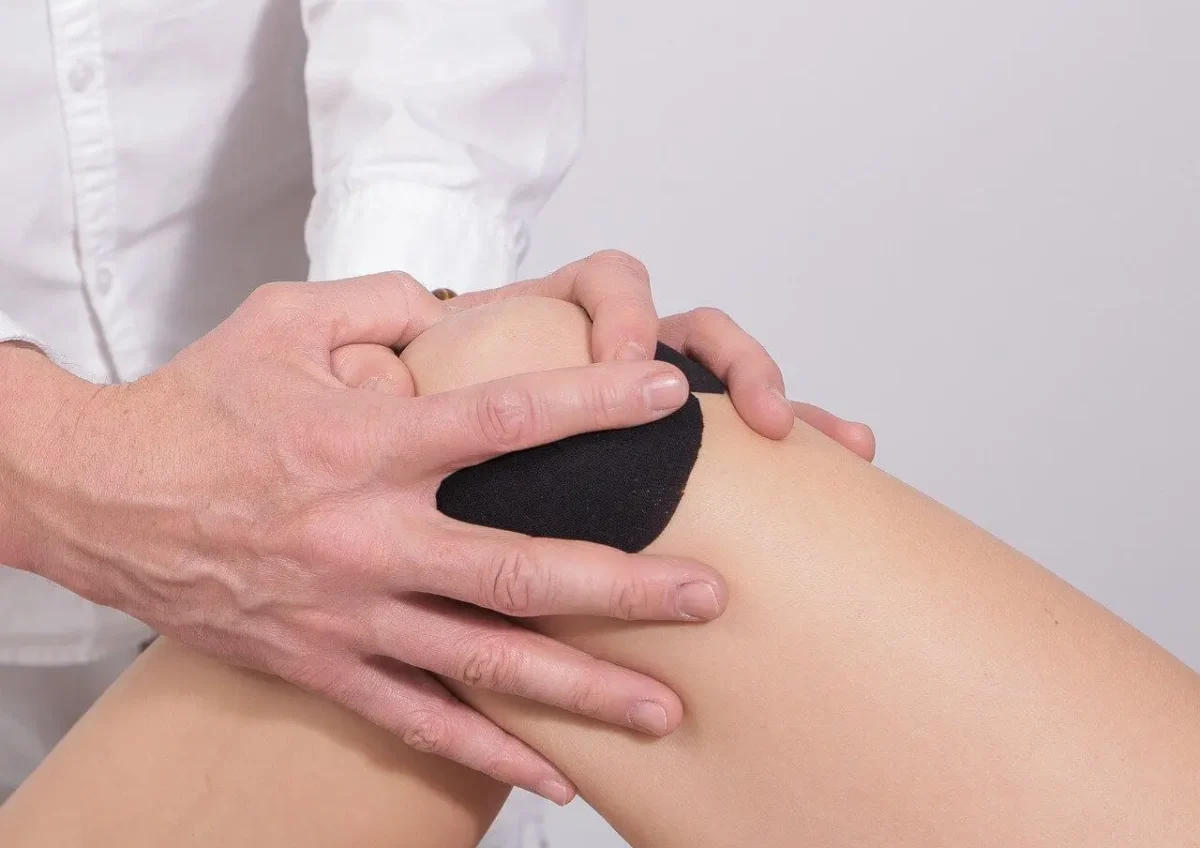
joint or articulation is the connection made between bones in the body which link the skeletal system into a functional whole. They are constructed to allow for different degrees and types of movement. Some joints, such as the knee, elbow, and shoulder, are self-lubricating, almost frictionless, and are able to withstand compression and maintain heavy loads while still executing smooth and precise movements

The 10 Effects of Aging Changes

  1. People lose bone mass or density as they age, especially women after menopause. The bones lose calcium and other minerals.
  2. The spine is made up of bones called vertebrae. Between each bone is a gel-like cushion (called a disk). The middle of the body (trunk) becomes shorter as the disks gradually lose fluid and become thinner.
  3. Vertebrae also lose some of their mineral content, making each bone thinner. The spinal column becomes curved and compressed (packed together). Bone spurs caused by aging and overall use of the spine may also form on the vertebrae.
  4. The foot arches become less pronounced, contributing to a slight loss of height.
  5. The long bones of the arms and legs are more brittle because of mineral loss, but they do not change length. This makes the arms and legs look longer when compared with the shortened trunk.
  6. The joints become stiffer and less flexible. Fluid in the joints may decrease. The cartilage may begin to rub together and wear away. Minerals may deposit in and around some joints (calcification). This is common in the shoulder.
  7. Hip and knee joints may begin to lose cartilage (degenerative changes). The finger joints lose cartilage and the bones thicken slightly. Finger joint changes are more common in women. These changes may be inherited.
  8. Lean body mass decreases. This decrease is partly caused by a loss of muscle tissue (atrophy). The speed and amount of muscle changes seem to be caused by genes. Muscle changes often begin in the 20s in men and in the 40s in women.
  9. Lipofuscin (an age-related pigment) and fat are deposited in muscle tissue. The muscle fibers shrink. Muscle tissue is replaced more slowly. Lost muscle tissue may be replaced with tough fibrous tissue. This is most noticeable in the hands, which may look thin and bony.
  10. Muscles are less toned and less able to contract because of changes in the muscle tissue and normal aging changes in the nervous system. Muscles may become rigid with age and may lose tone, even with regular exercise.

Here are 5 tips to protect your joints

1. Stop smoking if you are a smoker!

Smoking and tobacco use are risk factors for everything from cardiovascular problems to cancer. Smoking can hamper your joints, too.

2. Replace energy drinks and soda with water

Water makes up about 80% of your body’s cartilage (the flexible, connective tissue that cushions your joints). If you don’t stay well-hydrated, your body will pull water from cartilage and other areas

3. Don’t let extra weights overtax your joints

Your joints are meant to sustain a certain amount of force. If you are overweight or underweight, you’re likely putting more stress on your joints. A hearty mix of fruits and vegetables, as well as whole grains and healthy fats, can help to reduce your inflammation and protect your heart.

4. Always warm-up and cool down

If you skip the warm-up and start your exercise will put your joints at greater risk of strain and overloading. For the best result, we recommend the warm-up and cool-down exercise should take at least five minutes. Work with the same muscles you will use during exercise, but at a slow pace. Warm-up exercise is most important as you age because older joints are often less resilient.

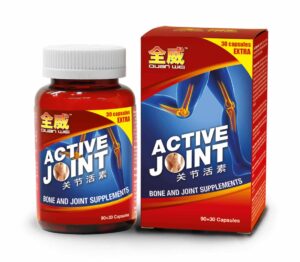
5. Taking joints supplement – Quan Wei Active Joint

quan wei active joint

Quan Wei Active Joint is made from a blend of minerals formula (Glucosamine Sulfate, Chondroitin, MSM) and herbs (Morinda, Epimedium, Sambucus, etc.). Glucosamine is commonly taken in combination with chondroitin to help patients suffering from joint problems, particularly those who suffer from osteoarthritis.

How will Quan Wei Active Joint benefit me?

  • Regenerates and repair cartilage cells
  • Recondition joint function
  • Support articular cartilage
  • Improve cartilage’s elasticity
  • Control the balance of the synovial fluid secretion
  • Enhances liver vitality
  • Combats poor calcium absorption

How to use: Take twice daily, 2 capsules each time.

Packing size: 90+30 capsules.